 About Us
Albatroz Engineering specializes in robotics, aeronautics, signal processing and computer science applied to the analysis of power line grids and 3D modeling with LiDAR.
It is team of 21 persons based in Lisbon, Portugal.
Learn more.
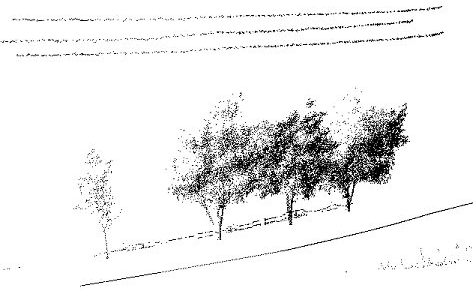 Environmental issues around over-head lines
When transmission and distribution utilities achieve the highest standards in quality of service, measured in SAIFI, SAIDI or Equivalent Interruption Duration (or Time), the number of events due to asset condition is superseded by events coming from the environment, which should be regarded in a broad sense.
This is Albatroz Engineering's approach, mirrored on its first application for LiDAR based vegetation management, a key component of Power Line Maintenance Inspection.
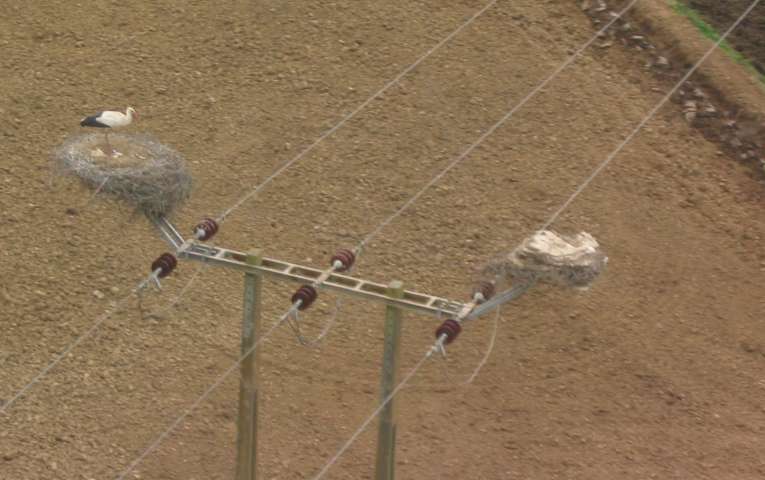 Soon afterwards, the focus turned to storks who happen to be very fond of high voltage towers, and telephone poles too. Storks add significant challenges that stimulate some original, if not odd, solutions to reach satisfactory coexistence between birds and power lines.
Bushfires (=wildfires), pollution and lightning add further to the complexity of the analysis of the grid condition and to the requirements of power line inspections.
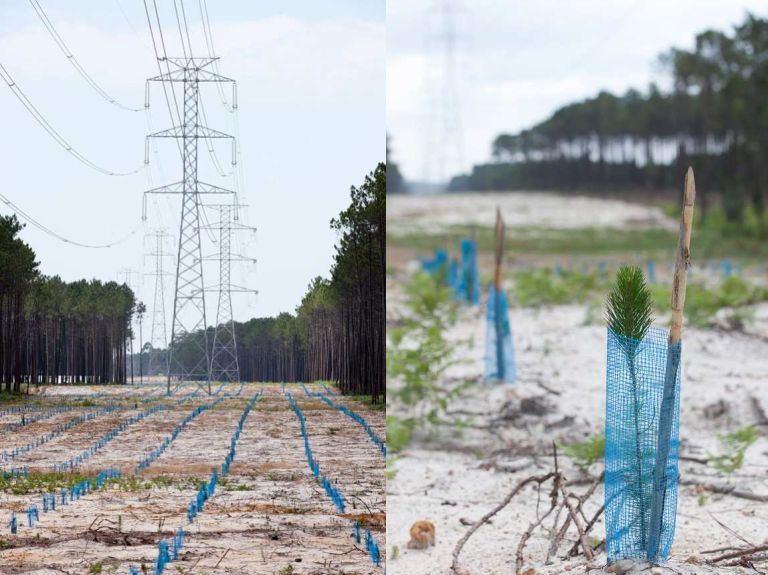 Environmental challenges are the subject of publications on vegetation at CMDM2013 (Romenia), on computer vision for stork nests at ConfeTELE 2013 (Portugal), on risk assessment at CIGRE2012 Canada and EEEIC 2012 (Italy), just to mention the more recent.
Such environmental concerns shape the activitiy of the company altogether, as stated.
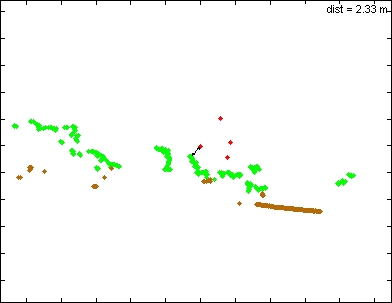 Pinpoint clearance issues
One of the most valuable results of Power Line Maintenance Inspection is the ability to pinpoint exactly the location of each clearance violation, including in real-time during inspection flights, if required. LiDAR helps measure distances to nearby objects and signal processing performs real-time classification of objects.
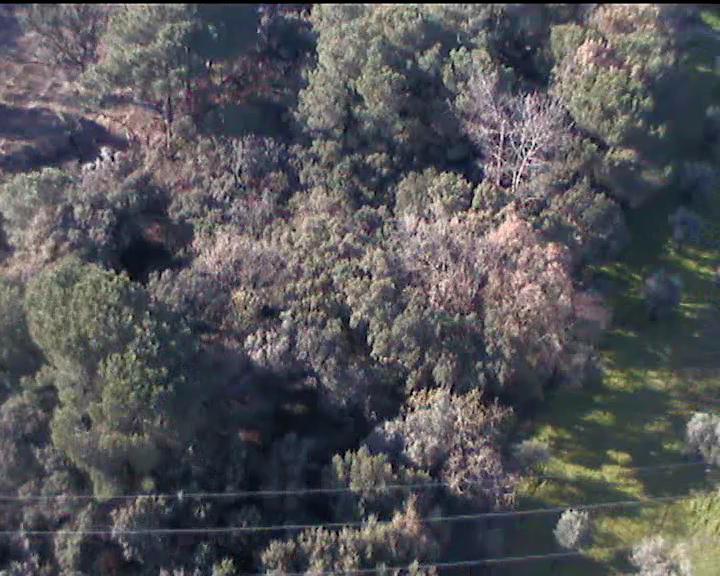 This feature helps maintenance teams streamline their work and head directly to the tree, knowing how much to trim: the example shows a 2,33m distance when 5m was specified. The nature of the tree can be inspected from the video image (acquired at the same location as the above LiDAR based image). This capability is important to forecast tree growth rates.
Vegetation management teams involved in preventive maintenance aggregate sets clearance issues according to severity and distance to neighbours to create effective routines.



 About the ASLMS2009
  Project Chaplin
 Fun corner